
Grief · Dignity · Communication · Companionship
A magazine for the questions that remain
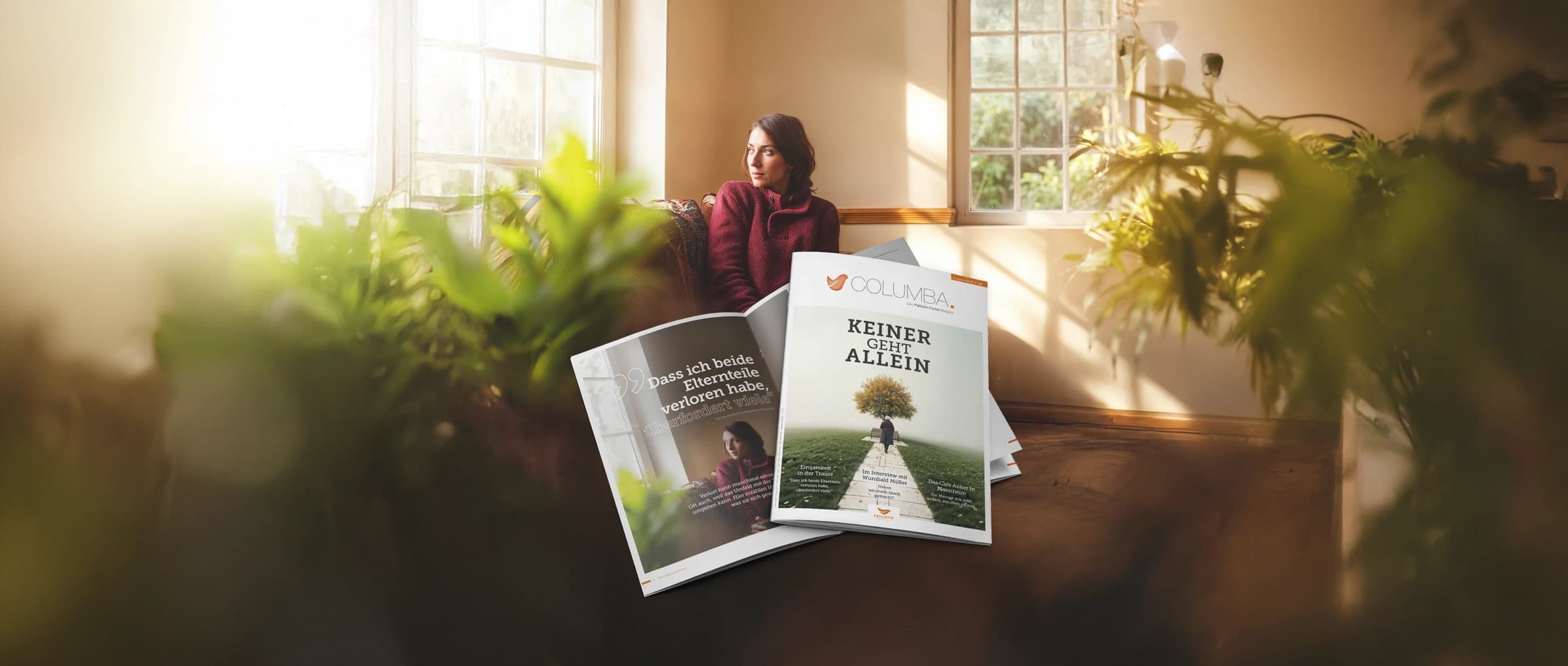
COLUMBA writes about what is rarely said out loud in hospitals, hospices and living rooms: dying, grief, dignity, and what remains between people when time runs short. No advice columns, nothing softened — real voices from the practice of palliative care.
„Am Ende spielt Wagners Götterdämmerung, während ihr Sarg hinabgelassen wird. Den Musiker aus Bayreuth hatte Elisabeth ein Leben lang vergöttert, seine Klänge begleiten sie nun in den Tod. Roland Friedrich weiß: seine…“
Final Twilight of the Gods · 3|17
The magazine
What COLUMBA writes about
Every issue gathers voices from practice — curated by an editorial team that comes from palliative care itself.
Grief
What grief feels like when words fail — and what can help carry it.
e.g. “Final Twilight of the Gods”Dignity
What a dignified farewell means — for the dying and for those who remain.
e.g. “Voluntary stopping of eating and drinking”Communication
Conversations that are hard — and how they can still succeed.
e.g. “Idiolectics and methodical immoralism”Companionship
What it means to accompany someone to the end — as family, or as a professional.
e.g. “Hospice and Palliative Care Act”Physicians
Expertise from everyday clinical practice.
Care professionals
Perspectives from day-to-day care.
Chaplaincy
On meaning, comfort and final questions.
Families
Personal experience, unfiltered.
History & transition
How we got here
Before COLUMBA went digital, it was printed for many years.


From the Palliativ-Portal's printed archive
The legacy
COLUMBA began as a printed issue of the Palliativ-Portal: writing from physicians, chaplains, carers and families, gathered issue by issue. Not an advice column — first-hand experience.
The Palliativ-Portal has accompanied people in palliative care for many years. Digital COLUMBA builds on that legacy — it replaces none of it.
The transition
Until now
An issue in the mailbox
Limited print run, limited reach — made for one moment a year.
From now on
Reachable at any time
The same writing, instantly available — at night, in a waiting room, in English or German.
The difference
What you can do with COLUMBA digitally that print never allowed
Digitization is more than uploading a PDF — it's a complete, new reading experience.
Fast loading
Issues open in seconds, even on a first visit.
Listen instead
Articles narrated, in several voices and languages.
Standalone articles
One piece is enough — no need to load the whole issue.
Zoom & spreads
Read as in the original, down to the last detail.
Light & dark
Comfortable to read, day and night.
Every device
Smartphone, tablet and desktop, equally well.
Two languages
German and English, fully maintained.
Continue reading
Remembers where you last left off.
Example · Narrated article
Book presentation to Hermann Gröhe, Member of the Bundestag
Audio available
EN Female · Sarah - Mature, Reassuring, Confident
What's already here
The first issues have been carefully digitized. Older volumes — not the newest — as a first, deliberate step in an archive that reaches back much further.
COLUMBA informs: Here for you
Reader opinions
What comes next
More volumes from the archive
Older and newer issues follow continuously, not all at once.
More narrated articles
More pieces to listen to, in more voices.
More languages, more access
German and English today — further access in preparation.
Ready to read chapter one yourself?
Create a free account and start reading the digitized issues right away — with zoom, narration, and on every device.